Neurological disorders, including Restless Legs Syndrome, become a major global health priority

Supporting the Intersectoral Global Action Plan on Epilepsy and other Neurological Disorders and calling for its close alignment with the EU NCD Initiative “Healthier Together”
The European Alliance for Restless Legs Syndrome (EARLS), along with other members of the European Federation of Neurological Associations (EFNA), celebrates a major milestone for all those affected by neurological disorders, with the adoption of the Intersectoral Global Action Plan on Epilepsy and Other Neurological Disorders (GAP) at the 75th World Health Assembly.

We fully endorse its aims, will support its implementation in Europe, and celebrate the positive impact it should have for those living with neurological disorders, their carers, the medical professionals who support them, and those researching scientific breakthroughs in prevention, diagnosis and treatment.

We call for a close alignment of the GAP with the EU NCD Initiative ‘Healthier Together’, expected to be adopted in June 2022. A conjunction of the NCD Initiative and the GAP couldn’t be timelier. The European community is now presented with a unique window of opportunity to provide an integrated and cross-sectorial response to neurological health. Investing in this holistic model can bring measurable health and economic gains to European countries. This includes decreasing the incidence of neurological disorders, improving survival rates, reducing complications and disability, lowering treatment costs and – ultimately – ensuring a better quality of life for all those affected. 

In view of the above, we strongly believe that the NCD Initiative activities addressing neurological disorders should fully align with the targets of the GAP which provides a comprehensive framework for national action. This synergistic and horizontal approach will be the most efficient use of resources that are limited and need to be spent wisely.

The GAP will address the worldwide and European challenges and gaps in providing care and services for people with neurological disorders and ensure a comprehensive, coordinated response. Together with the umbrella organisation EFNA and its OneNeurology partners EARLS support the targets and strategic aims of the GAP:

•          To raise the prioritization of, and strengthen governance;

•          To provide effective, timely and responsive diagnosis, treatment, and care for all patients;

•          To implement strategies for promotion and prevention;

•          To foster research and innovation into, and strengthen information systems;

•          To strengthen the public health approach to epilepsy.

The GAP will deal with a wide range of conditions integral to the patient support, advocacy, research and teaching activities. It covers all ages, including children and young adults, and addresses palliative care and neurorehabilitation. 

The CAP thus has the potential to directly benefit the more than 400 diseases classified as neurological, including Restless Legs Syndrome: improving the public health outcomes for a vast array of conditions of the central and peripheral nervous system connected to the brain. With 1 in 3 people affected by a neurological disease at some point in their life[1], over the past 30 years the number of deaths due to neurological disorders has increased by almost 40%[2]. In Europe, neurological disorders are the third leading cause of disability adjusted life years (DALYs) and third leading cause of deaths (in 2017 alone, 1.1 million people died due to neurological disorders in the EU, making up for almost 20% of total deaths)[3].

The neurology community now has a unique opportunity to work together on the GAP implementation (something which can only happen if member states are ready to prioritise neurology and provide dedicated resources). Now is the time to act with a coordinated response.


[1] The economic cost of brain disorders in Europe. Eur J Neurol. 2012; 19(1):155-62 (ISSN: 1468-1331). For comparison with other disease areas see: Economic burden of cancer across the EU: a population-based cost analysis (2009)

[2] Global, regional, and national burden of neurological disorders, 1990–2016: a systematic analysis for the Global Burden of Disease Study 2016 Feigin, Valery L et al. The Lancet Neurology, Volume 18, Issue 5, 459 – 480

[3] Deuschl G, et al. Burden of neurological diseases in Europe: an analysis for the Global Burden of Disease Study 2017. Lancet Public Health. 2020 Oct;5(10):e551-e567
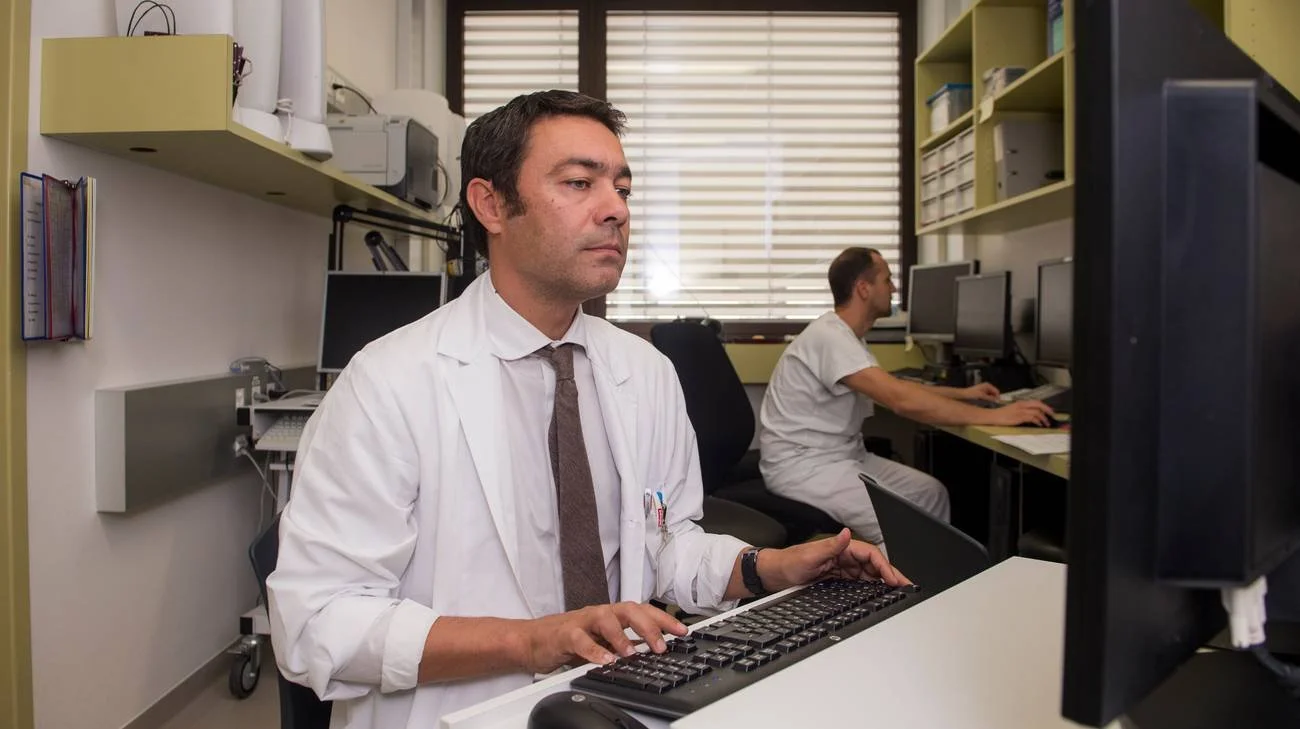

The common medical condition you've never heard of (BBC Reel)

'Restless legs syndrome' (RLS) is a condition of the nervous system that, in its most serious form, can be highly debilitating. It is thought to affect roughly 10 percent of people worldwide, so how come it is still relatively unknown and poorly understood?

BBC Reel's Howard Timberlake goes in search of some facts and discovers that the condition, and some of the medication used to treat it, throws up more questions than it does answers.

You can watch the BBC article here…

Source: https://www.bbc.com/reel/video/p0bvy1j0/th...

EARLS Statement in Support of Ukraine

It is with deep concern and enormous sadness that we at EARLS regard the unprecedented military aggression against Ukraine. While EARLS remains an apolitical organisation representing European RLS patient groups, we refute the use violence of any kind in settling disputes.

We appeal for an immediate cessation of hostilities in Ukraine and call for a peaceful resolution. Life in a war zone directly endangers patients, their families and healthcare professionals. Disruption to the safe and effective delivery of treatment and care is an added burden to those affected by neurological conditions.

We plead for peace during this difficult time, and EARLS remains available to facilitate communication and advocate for the health and safety of our members and the patients they serve across Europe.

Katharina Glanz (President) on behalf of all EARLS members

If you are in a position to do so, please consider making a donation to the https://www.ukraine.who.foundation/

New survey on "Assessing the diagnosis and care pathways of people withneurological disorders in Europe"

On the occasion of International Women's Day, the European Federation of Neurological Associations (EFNA) is conducting a survey on "Assessing the diagnosis and care pathways of people with neurological disorders in Europe".

Despite the higher prevalence rate in women than in men of many neurological disorders (e.g. multiple sclerosis, migraine, Alzheimer's disease), gender stereotypes can have a negative impact, leading to under-diagnosis, misdiagnosis and delayed treatment. Furthermore, while women experience neurological disorders differently to men (symptomatic profile, pace of progression and effectiveness of medication), women are often excluded from research.

In addition to the experience of the patient, the majority of informal caregiving roles are occupied by women who are also burdened by the gender divide.

This survey has been developed with the aim of identifying, reporting and beginning to address the varied challenges facing all affected by neurological conditions, either as patients or caregivers, from diagnosis to care pathway. Data generated through this survey can be used to address the unmet needs and challenges facing all affected by neurological conditions.

The survey is open to anyone over the age of 18 who is living with a neurological disorder, or who is carer to someone living with a neurological disorder, that resides in Europe. It is available in 8 languages- English, French, German, Italian, Spanish, Portuguese, Polish and Romanian.

The survey can be accessed at https://www.surveymonkey.com/r/JQW27L2

Deadline for completion of the survey is Tuesday, April 19th.

ICD-11 - Restless Legs Syndrome (RLS) is reclassified

RLS is a marginal phenomenon in the media and unfortunately also in medical perception. This is about to change - as shown by the new ICD-11 disease catalogue.

The International Classification of Diseases (ICD) is a globally recognised system used to give uniform names to medical diagnoses. ICD stands for "International Statistical Classification of Diseases and Related Health Problems".

The ICD is administered by the WHO and used in countries all over the world. Each disease is assigned an ICD code. This is found in patient records, including hospital records, medical charts, visit reports and bills. These codes ensure that patients receive the right treatment and that all medical services are billed correctly. Insurance companies expect the codes to match between a condition and the treatment provided. The codes are used in clinical trials to recruit and track subjects. The ICD is also useful, for example, to facilitate data exchange. ICD codes are also used worldwide to collect health statistics such as morbidity (disease) and mortality (causes of death). This is particularly useful for collecting data on non-communicable diseases. 

The 11th version of the International Classification of Diseases 11 (ICD 11) came into force on 1 January 2022. And it is here that we find a significant - one might almost say historic - change for RLS sufferers. In the older versions of the ICD, RLS was still classified under the collective group "Other extrapyramidal diseases and movement disorders". In the new ICD-11, RLS has been given its own code under sleep-related movement disorders: "7A80 - Restless Legs Syndrome".

What does this mean exactly? It means first and foremost that the WHO perceives Restless Legs Syndrome in a much clearer way, giving it a completely new meaning. This is more than just an abstract health policy decision but will result in RLS being perceived much more by doctors and scientists than was previously the case.

Written by Ralf Wenzel, RLS advocacy group Hamburg-Bergedorf (Germany)

The end of Augmentation?

clemens.png

Stefan Clemens, an East Carolina University (ECU) associate professor at the Brody School of Medicine’s Department of Physiology, was awarded a US patent for his novel method of treating restless legs syndrome (RLS), which could lead to more effective care over a longer period of time for patients.

RLS is frequently treated with dopaminergic drugs to replace or prevent the loss of dopamine. While these drugs can deliver a high initial effect, they often lose their effectiveness over time and symptoms can worsen, a side effect known as augmentation. Classic RLS treatments act on a dopamine receptor known as D3, which has a suppressive effect in the nervous system.

Clemens’ animal models show that over time the medication leads to an increase of a different, excitatory receptor subtype, D1. This increase of the D1 receptor might be the cause of augmentation. Clemens’ patent, which he received in late August 2020, targets the increased D1 receptor levels in RLS patients suffering from augmentation, leading to reduced activation of D1 receptors while providing traditional therapy relief from RLS.

“Our lab postulates that this new compound will maintain long-term efficacy for RLS,” Clemens said. “If augmentation begins, we predict that we can reduce D1 receptor activation in patients and balance things back out, keeping the treatment effective.”

Using a grant from the North Carolina Biotechnology Center, Clemens and a collaborator from the University of Houston will run a small pilot study of the new treatment method. His work also gained the attention of a company that has interest in establishing a partnership where ECU’s patent rights may be used in combination with its existing drug formulation for treating augmentation. “The patent would not have been issued without their help,” said Clemens, who is also working on medical treatments for opioid pain tolerance. “I now know that it can be very beneficial to have experts in other areas come from different angles that make us think of other ways to use our work.” Clemens is a member of the Foundation's Scientific and Medical Advisory Board and is the Chair of the Research Grant committee.